🏛️ Lieu
Patrimoine & Culture
FAYL-BILLOT
📍 Fayl-Billot, Haute-Marne
· 52500 Fayl-Billot
À propos
Forestry, agriculture and crafts are the main economic activities.
Situated between town and country, the village offers a full range of shops, medical services, schools (from kindergarten to the Lycée Professionnel Agricole et Horticole, including after-school care), tertiary and personal services.
Fayl-Billot stretches across a plain, descends into a valley where the Fayl river flows (a tributary of the Salon, itself a tributary of the Saône), then rises to the top of the opposite hillside. The oldest part of the town is called "Le Vau" (the original site of the village), with the RN19 running along its entire length. It forms the largest part of the town.
Over the centuries, it has undergone various influences that are still evident today in its architecture, housing and traditions. It's a land of marches, invasions and troop crossings?
The origins of Fayl-Billot date back to the year 450, when it was just a hamlet without a church. The town owes its origins to the priory (circa 900), whose church was both priory and parish, serving both monks and parishioners.
Fayl-Billot was part of the Duchy of Burgundy. The seigneury was divided into several fiefs. There was a fortified castle (on the site of today?s basket-making school) built by the lords of Fouvent around the 12th century. In 1324, Guy de Châtillon, lord of Fayl and Morey, granted the inhabitants a charter of freedom. Philippe-le-Bon, Duke of Burgundy, confirmed these privileges in 1448.
In 1423, Fayl-Billot had just 320 inhabitants. The village grew and by 1635 had 1,800 inhabitants. In 1636, the passage of Gallas troops, who had established their headquarters in Fayl-Billot, caused destruction. In 1668 and 1687, two fires ravaged the village. Fayl-Billot struggled to recover. Nevertheless, the town grew and by 1730 had 2,200 inhabitants. In addition to cultivating their land, the inhabitants traded extensively in chairs and wickerwork.
At the same time, a hospice (now a retirement home) and a girls? school were founded and run by three nuns from Saint-Charles de Nancy.
In 1743, Louis XV, Madame Royale, Duchesse d'Angoulême (daughter of Louis XVI) in 1795 and the Russian Emperor Alexander I in 1814 stopped off in the town. In June 1831, King Louis-Philippe reviewed the National Guard.
To discover:
The word Fayl derives from the Latin Fagus, which gave foyard, proving that trees have always been worshipped here. The undulating terrain of Bois Banal is wooded by spontaneous and natural forests, as well as by coniferous plantations (spruce, Scots pine, black pine, larch, etc.). The deciduous trees include oaks, hornbeams, ashes, beeches, sycamores and plane trees of impressive size. A place of silence, calm and peace, it's an ideal destination for walks in all seasons. It features a fitness trail, children?s play area and fishing pond.
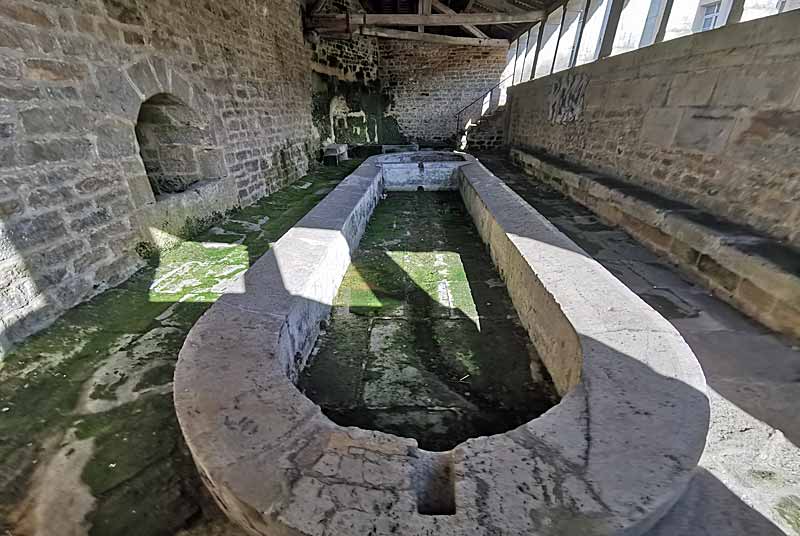
Fayl-Billot covers an area of almost 3,000 hectares, and the forest covers some 1,200 hectares. Logging is still practiced here. The forest purifies the air and regulates the infiltration of rainwater, so that Fayl-Billot boasts a number of abundant springs, fountains and washhouses. The forest also boasts a number of curiosities that make for wonderful walks: the five oaks, the limonière, the Vierge oak?
Situated between town and country, the village offers a full range of shops, medical services, schools (from kindergarten to the Lycée Professionnel Agricole et Horticole, including after-school care), tertiary and personal services.
Fayl-Billot stretches across a plain, descends into a valley where the Fayl river flows (a tributary of the Salon, itself a tributary of the Saône), then rises to the top of the opposite hillside. The oldest part of the town is called "Le Vau" (the original site of the village), with the RN19 running along its entire length. It forms the largest part of the town.
Over the centuries, it has undergone various influences that are still evident today in its architecture, housing and traditions. It's a land of marches, invasions and troop crossings?
The origins of Fayl-Billot date back to the year 450, when it was just a hamlet without a church. The town owes its origins to the priory (circa 900), whose church was both priory and parish, serving both monks and parishioners.
Fayl-Billot was part of the Duchy of Burgundy. The seigneury was divided into several fiefs. There was a fortified castle (on the site of today?s basket-making school) built by the lords of Fouvent around the 12th century. In 1324, Guy de Châtillon, lord of Fayl and Morey, granted the inhabitants a charter of freedom. Philippe-le-Bon, Duke of Burgundy, confirmed these privileges in 1448.
In 1423, Fayl-Billot had just 320 inhabitants. The village grew and by 1635 had 1,800 inhabitants. In 1636, the passage of Gallas troops, who had established their headquarters in Fayl-Billot, caused destruction. In 1668 and 1687, two fires ravaged the village. Fayl-Billot struggled to recover. Nevertheless, the town grew and by 1730 had 2,200 inhabitants. In addition to cultivating their land, the inhabitants traded extensively in chairs and wickerwork.
At the same time, a hospice (now a retirement home) and a girls? school were founded and run by three nuns from Saint-Charles de Nancy.
In 1743, Louis XV, Madame Royale, Duchesse d'Angoulême (daughter of Louis XVI) in 1795 and the Russian Emperor Alexander I in 1814 stopped off in the town. In June 1831, King Louis-Philippe reviewed the National Guard.
To discover:
The word Fayl derives from the Latin Fagus, which gave foyard, proving that trees have always been worshipped here. The undulating terrain of Bois Banal is wooded by spontaneous and natural forests, as well as by coniferous plantations (spruce, Scots pine, black pine, larch, etc.). The deciduous trees include oaks, hornbeams, ashes, beeches, sycamores and plane trees of impressive size. A place of silence, calm and peace, it's an ideal destination for walks in all seasons. It features a fitness trail, children?s play area and fishing pond.
Fayl-Billot covers an area of almost 3,000 hectares, and the forest covers some 1,200 hectares. Logging is still practiced here. The forest purifies the air and regulates the infiltration of rainwater, so that Fayl-Billot boasts a number of abundant springs, fountains and washhouses. The forest also boasts a number of curiosities that make for wonderful walks: the five oaks, the limonière, the Vierge oak?